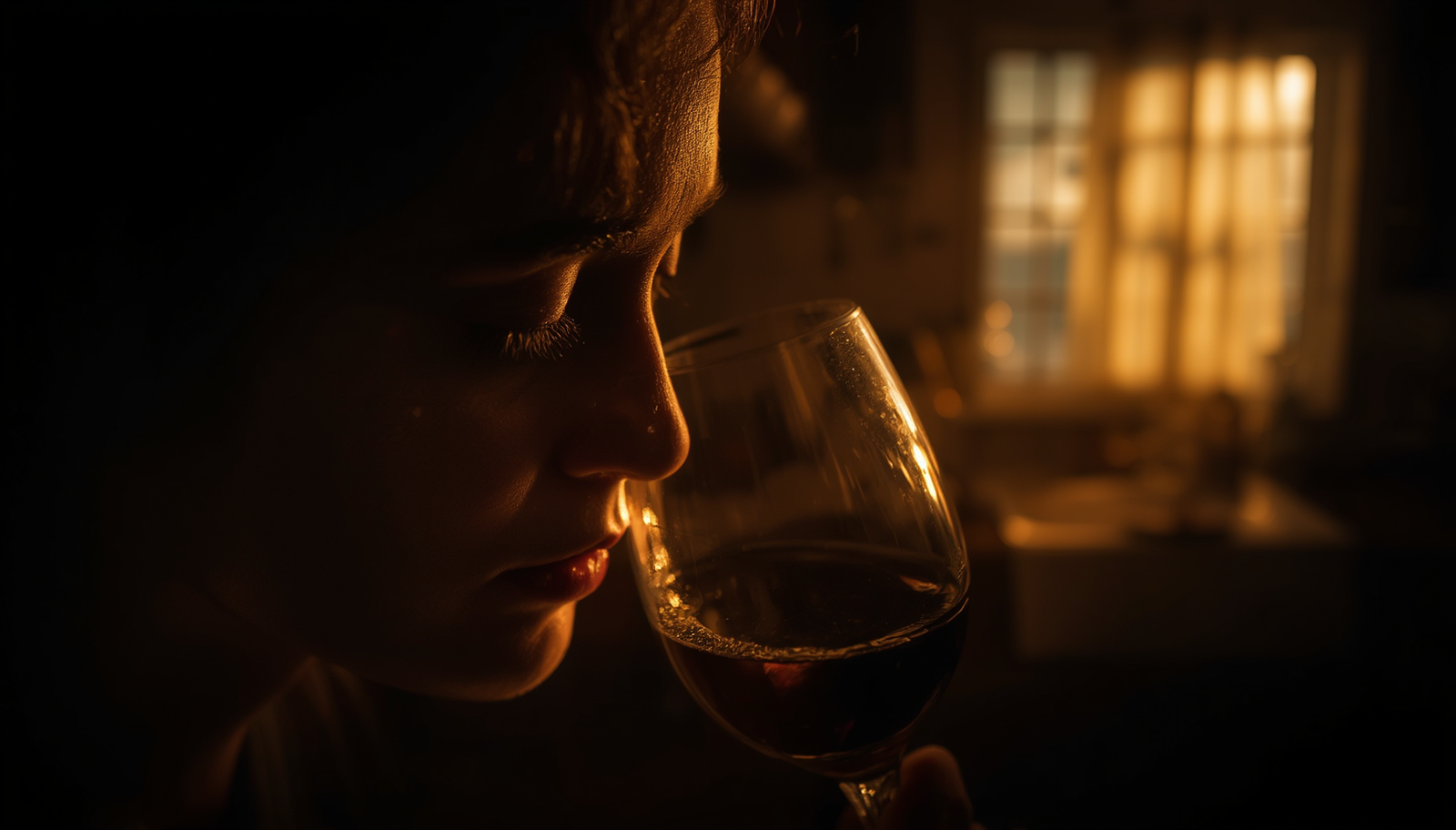
Why Your Palate is Unique:
The Fascinating Science of Subjective Taste
Last week, I ordered a highly rated bottle of wine only to find it completely disappointing. Meanwhile, My wife was in absolute heaven.
For decades, the culinary world has pushed the narrative of the «expert palate»—the idea that certain vintages or food pairings are universally superior. But modern science is finally catching up to what your gut has been telling you all along: tasting is a deeply personal, highly subjective experience.
Taste is not Universal
Here is a look inside the fascinating, individualized science of how we experience food and drink.
1. The Olfactory System: A Direct Line to Your Memories
Before food even touches your tongue, you are already tasting it through your nose. The olfactory system is arguably our most personal sensory mechanism. Unlike our other senses, which pass through a central processing hub in the brain, scent signals travel directly to the amygdala and hippocampus. These are the exact brain regions responsible for emotion and memory.
This means a single aroma can trigger a vivid childhood memory or an emotional response unique only to you. When you smell a wine, you aren’t just detecting chemical compounds; you are filtering them through your entire life history. Yep! it absolutely explains why most of us remember specific moments ( a family dinner, a BBQ, a walk or and any other situation) and not molecules;-)
2. The Numbers Game on Your Tongue
We like to think we all share the same anatomy, but our mouths tell a different story. The number of taste buds varies wildly from one person to the next. While the average person has a moderate distribution, individual counts range anywhere from 2,000 to over 8,000 taste buds.
If you are on the higher end of that spectrum, you might be a «supertaster,» experiencing bitterness, sweetness, and textures with extreme intensity. If you are on the lower end, you might require much stronger flavors to get the same kick. Apparently, Babies have up to 10.000 taste buds and their numbers will decline with time, maybe one of the reason older people seems keener on dry, tannic red wine?
3. Your Chemistry is Constantly Changing
Even the liquid environment of your mouth alters the flavor of your food. Human saliva is highly variable. Your specific salivary flow rate, the protein content (proline and mucin), and the pH levels in your mouth change how food compounds dissolve and interact with your receptors. Because your biology is unique, a piece of dark chocolate or a sip of espresso literally undergoes a different chemical transformation in your mouth than it does in anyone else’s.
4. The Trigeminal Nerve: The Universal Sensor
Now here is the interesting part, there is one mechanism we all share, though you may have never heard of it: the trigeminal nerve.
While your taste buds detect sweet, salty, sour, bitter, and umami, the trigeminal nerve is responsible for the tactile and thermal experience of eating. It is the reason mint feels cold, chili peppers feel hot, and carbonation tingles. It detects the crunch of a chip and the smooth velvet of a cream sauce. It is our most universal sensory pathway, providing the physical architecture of texture that connects us all to what we eat. Once understood it all makes sense, aromas are important but their perception is highly personal (subjective), now this trijeminal nerve helps to define wine structure and texture. From light and juicy red to intense full-bodied one!!!
5. Mind Over Mouth: The Power of Environment
Last no the least, our environment will enhance or modify our tasting experience!
Finally, tasting doesn’t happen in a vacuum. Your surroundings alter your perception. Studies have shown that the lighting in a room, the background music playing, and even the texture of the cutlery you touch can completely change how you perceive sweetness, acidity, and quality. A wine tasted under warm lights with soft jazz will taste fundamentally different than the exact same wine poured in a bright, noisy room.
The Verdict: Trust Your Own Palate
When you look at the science, the conclusion is undeniable: we are all wired differently.
Because taste is highly subjective, rigid theories about «the best wine in the world» or perfect scores designed by a single critic should not be taken too seriously. Strict food and wine matching rules are not absolute laws—they are merely suggestions. And if you enjoy a t-bone steack with a sweet wine, well, good for you!
The next time someone tells you what you should be tasting, remember your unique biology. Trust your own palate, embrace your personal preferences, and enjoy food your way. After all, nobody experiences the world quite like you do!